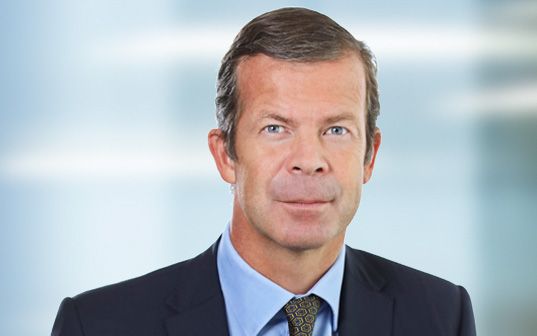
On May 7, 2026, participants in the SEAPIN (Supporting the Emergence of Active Philanthropists in Nigeria) learning session gathered for a conversation that quickly evolved beyond philanthropy in the traditional sense.
What unfolded was not simply a discussion about giving. It became a deeper reflection on stewardship, institutional longevity, values, systems thinking, and the difficult work of building structures that can outlive generations.
The session featured Prince Max von und zu Liechtenstein, CEO of the LGT Group, whose family legacy spans more than 900 years, an extraordinary timeframe that naturally invites questions around continuity, leadership, and relevance. But perhaps the most striking part of the conversation was not the age of the family itself. It was the philosophy behind how that legacy has survived.
Very early in the session, Prince Max shared a principle that immediately resonated with participants:
“Keep the sense of responsibility high and the sense of entitlement low.”
In many ways, that single statement framed the entire conversation.
Across Africa today, a growing number of families are beginning to ask difficult but necessary questions:
-
- What happens to wealth after the first generation?
-
- How do families preserve purpose alongside prosperity?
-
- How do philanthropic efforts move from informal giving to structured impact?
-
- And perhaps most importantly, how do institutions survive beyond the personality of the founder?
These questions sat quietly beneath almost every part of the discussion.
Prince Max explained that centuries ago, the Liechtenstein family intentionally developed systems designed not merely to preserve wealth, but to preserve relevance and responsibility over time. The family embedded purpose into its structure, creating expectations around stewardship, societal contribution, and long-term thinking.
What stood out was that the conversation never romanticised legacy. Instead, it emphasised intentionality. Values, according to Prince Max, do not sustain themselves automatically across generations. They must be deliberately reinforced through storytelling, culture, systems, and leadership.
Even more interesting was his acknowledgement that many family stories evolve over time and may no longer be perfectly historically accurate. Yet the stories themselves still matter because they shape identity, behaviour, and culture within the family system.
For African philanthropic families navigating succession and generational transition, this insight felt particularly important. Too often, conversations around wealth on the continent remain heavily focused on accumulation. Far less attention is given to continuity. And yet continuity may ultimately prove more difficult than wealth creation itself.
Throughout the session, Prince Max repeatedly returned to one central idea: ecosystems. He described the world not as isolated sectors or institutions, but as overlapping systems of families, businesses, governments, non-profits, communities, and financial institutions, all constantly influencing one another.
This ecosystem perspective offered an important lens for African philanthropy. Many social interventions across the continent still operate in isolation, education disconnected from healthcare, philanthropy disconnected from enterprise, policy disconnected from implementation, and impact disconnected from measurement. But systemic problems rarely respond to fragmented solutions.
According to Prince Max, meaningful impact requires understanding how these systems interact. That systems thinking also shaped the way he discussed philanthropy itself. One of the strongest tensions in the session emerged around the idea of disciplined philanthropy. Prince Max spoke candidly about applying the same rigour to philanthropy that many investors apply to business.
For him, good intentions alone are insufficient. Questions around scalability, operational efficiency, measurable outcomes, leadership quality, and impact depth are all essential.
At one point, he explained that his organizations constantly assess how many people are reached, how deeply they are impacted, and what each dollar truly achieves. This sparked considerable reflection among participants.
Across Africa, many philanthropic organisations are doing deeply meaningful work. Yet relatively few can clearly communicate the cost per beneficiary, the operational efficiency of their interventions, or the long-term outcomes being achieved. The issue is not necessarily a lack of impact. More often, it is a lack of structure, systems, and measurement. That distinction matters.
One participant working in educational infrastructure raised a practical challenge many African organisations face: how can non-profits scale when they lack the internal operational capacity, technical expertise, staffing, and systems required for growth?
It was one of the most honest moments of the session, because beneath many conversations about scaling lies a difficult reality: many African philanthropic organisations are expected to operate at global standards long before they have received the support necessary to build those capabilities.
Prince Max acknowledged this tension openly. He explained that many global philanthropic institutions naturally gravitate toward models that scale quickly, are easier to measure, and produce visible outcomes with relatively lower infrastructure complexity.
The implication was clear: Capacity building itself may be one of the continent’s most urgent philanthropic needs. Not simply funding projects, but building institutions. Not simply supporting interventions, but strengthening systems. This became even more relevant as the conversation turned toward Africa’s broader development narrative.
One participant reflected on an earlier session at AfricaXchange 2026 and shared a statement that captured a growing sentiment among African philanthropic leaders:
“In Africa, we have to put our foot down, tell our stories properly, and when what people want us to do doesn’t make sense, just say no and continue to do our thing our own way.”
That reflection lingered throughout the discussion.
For decades, many African development conversations have been externally framed, externally funded, externally measured, and often externally defined. But a subtle shift is beginning to emerge. Increasingly, African philanthropists are not only asking how to give more. They are asking how to give differently. How to build institutions instead of temporary interventions. How to combine enterprise, investment, and philanthropy more intentionally. How to preserve values alongside wealth, and how to move from charity toward stewardship.
Interestingly, Prince Max’s own work reflects this blending of disciplines. Through both LGT Venture Philanthropy and Lightrock, he operates at the intersection of philanthropy, impact investing, venture capital, and systems change. The distinction is important. Rather than seeing business and impact as separate worlds, he described them as complementary tools capable of shaping broader ecosystems when approached responsibly.
For many African participants, this perspective resonated strongly because the continent itself increasingly requires hybrid solutions. Governments alone cannot solve every systemic challenge. Traditional philanthropy alone cannot finance long-term transformation. And private capital without social responsibility risks deepening inequality. Africa’s future may ultimately depend on leaders capable of operating across all three spaces simultaneously. Perhaps that is why this session felt particularly timely.
Across the continent, a new generation of philanthropists is emerging as entrepreneurs, investors, family businesses, corporate leaders, and next-generation wealth stewards. Many are still defining what philanthropy should look like within an African context. And perhaps the most important lesson from the session was this: Long-term impact is rarely accidental. It requires values, discipline, systems, measurement, storytelling, and intentional stewardship.
A 900-year legacy does not survive through wealth alone. It survives because each generation chooses to carry responsibility forward. And for Africa’s emerging philanthropists, that may be the most important lesson of all.

