On May 14, 2026, participants of the Supporting the Emergence of Active Philanthropists in Nigeria (SEAPIN) programme convened for another powerful learning session focused on one of the most important questions facing philanthropic families and institutions today:
How do you build systems, structures, and institutions that endure beyond individuals and generations?
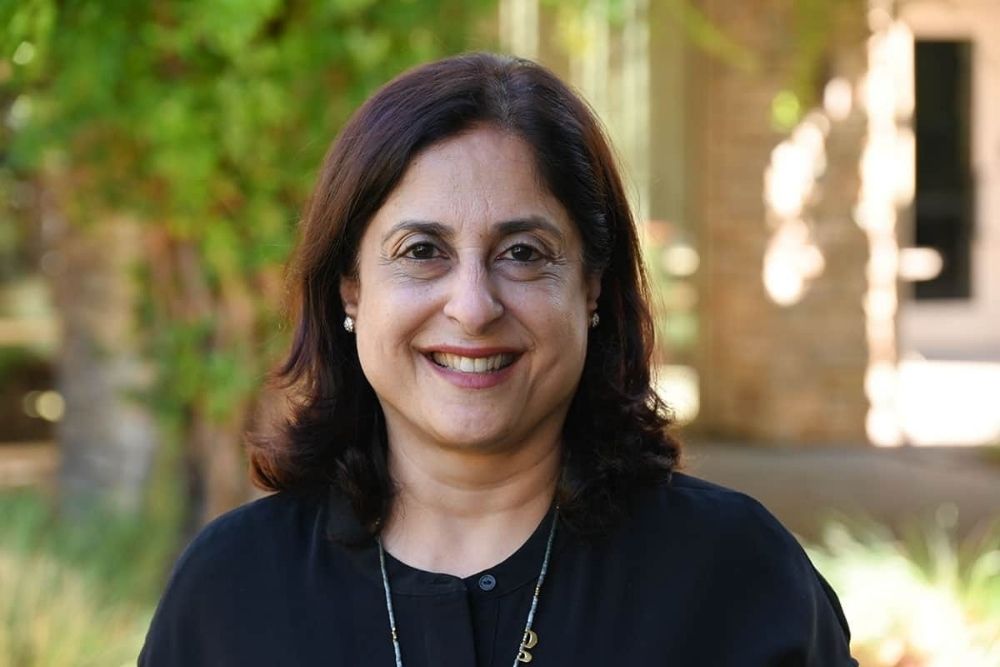
The session featured Muneerah Merchant, Chief Executive Officer of the Aga Khan Foundation USA, who shared insights drawn from decades of experience across institutional philanthropy, governance, partnerships, and systems transformation provided participants with a rare opportunity to learn from one of the world’s most established and respected philanthropic ecosystems.
The conversation moved beyond charity and short-term giving. Instead, it explored what it truly means to build institutions designed for continuity, long-term impact, and intergenerational stewardship.
For many participants, the session offered practical insights into how philanthropic families can move from informal generosity to structured, mission-driven impact.
Drawing from the Aga Khan Foundation’s institutional evolution since its establishment in 1967, Muneerah Merchant provided participants with practical insights into how philanthropic institutions can build resilient systems capable of sustaining impact across changing political, economic, and generational realities.
Understanding the Power of Institutional Philanthropy
A major theme throughout the session was the distinction between individual giving and institution-building.
Muneerah Merchant explained that sustainable philanthropy is rarely built around one individual. Instead, enduring impact often depends on creating systems, governance structures, leadership models, partnerships, and organisational cultures that can continue functioning effectively across generations.
Drawing from the Aga Khan Foundation’s experience across multiple countries and sectors, she highlighted how long-term philanthropic institutions are able to sustain impact because they are intentionally designed to evolve, adapt, and remain relevant over time.
Participants reflected deeply on what this means in the African context, where many philanthropic initiatives remain heavily founder-driven and often struggle with succession, continuity, and governance after the founding generation.
The discussion reinforced an important message:
Philanthropy that lasts beyond one generation requires more than resources. It requires structure.
As His Highness the Aga Khan noted in a reflection shared during the session:
“We have an opportunity — and responsibility — to assist people and communities to construct strong, resilient foundations, to ensure sustainable progress and lasting, positive change.”
The reflection reinforced one of the session’s central themes: enduring philanthropy is not simply about giving. It is about building resilient institutions, systems, and communities capable of sustaining impact across generations.
Governance Is Not Optional
One of the strongest conversations from the session centred on governance.
Muneerah Merchant emphasised that governance is not simply a compliance exercise or administrative requirement. Rather, it is the foundation that allows institutions to maintain clarity, accountability, trust, and continuity.
The session explored several governance-related themes, including the role of boards in sustaining institutional vision and accountability, why governance structures must evolve as organisations grow, the importance of defining roles and responsibilities clearly, building systems that reduce overdependence on founders, the need for succession planning within philanthropic institutions and ensuring values and mission remain protected across generations.
Participants also engaged with the reality that governance conversations can often feel uncomfortable within family-led philanthropy, especially where wealth, legacy, authority, and decision-making intersect.
However, the session highlighted that avoiding governance discussions often creates greater long-term risk. Strong governance, participants learned, is not about limiting family influence. It is about protecting institutional purpose. The session also explored practical governance considerations relevant to philanthropic families and institutions, including board structures, incorporation models, regional autonomy, and the role of family participation within governance systems. Participants reflected on the advantages and limitations of different operating and governance models, particularly within founder-led and family-led philanthropic institutions navigating questions of .continuity, accountability, and long-term stewardship.
Building Through Partnerships and Collaboration
Another major insight from the session focused on partnerships. Muneerah Merchant shared how the Aga Khan Foundation has built impact over decades through strategic collaboration, co-creation, and long-term partnerships across governments, communities, institutions, donors, and local actors.
Rather than positioning philanthropy as isolated giving, the session emphasised collaboration as a critical pathway for achieving sustainable and scalable impact.
Participants explored the importance of co-creation with communities, why local ownership strengthens programme sustainability, the value of co-investment and shared responsibility, building trust-based partnerships instead of transactional relationships, aligning philanthropic goals with ecosystem needs, and the role of listening in effective development work.
One of the most significant takeaways from this section was the understanding that enduring impact is rarely achieved alone. Long-term change often depends on the ability to convene, collaborate, and build alongside others. Muneerah Merchant further emphasised that sustainable impact is often strongest when institutions are locally led, community-informed, and intentionally designed to amplify community voice rather than impose externally developed solutions disconnected from local realities.
The Importance of Local Systems and Community Ownership
Throughout the conversation, Muneerah Merchant repeatedly emphasised the importance of local systems. Rather than importing external solutions, the session highlighted the value of strengthening community-led structures and investing in local capacity.
Participants discussed how many development efforts fail when interventions are designed without sufficient understanding of local realities, cultural contexts, or community ownership.
The Aga Khan Foundation’s approach demonstrated the importance of investing in long-term community relationships, supporting locally driven solutions, building institutional trust gradually over time, developing local leadership capacity, creating systems that communities can sustain independently.
This conversation resonated strongly with participants seeking to build philanthropy that is both impactful and deeply rooted in African realities.
Succession, Continuity, and Intergenerational Stewardship
A recurring theme throughout the session was continuity. Participants reflected on the challenge many philanthropic families face when transitioning leadership, values, and vision across generations.
Muneerah Merchant shared perspectives on how enduring institutions preserve mission and continuity by embedding values into systems, culture, governance, and organisational practices rather than relying solely on personalities.
The discussion reinforced that intergenerational philanthropy requires intentionality. Families must create structures that help future generations understand why the institution exists, what values guide its work, how decisions are made, what responsibilities accompany stewardship and how the mission can remain relevant while adapting to changing realities.
For many participants, this was one of the most important reflections from the session. The challenge is not only transferring wealth. It is transferring purpose, responsibility, and institutional discipline.
Learning as a Core Institutional Culture
Another important insight from the session was the role of continuous learning. Muneerah Merchant discussed how institutions that remain relevant over long periods often cultivate strong learning cultures that continuously reflect, adapt, evaluate, and evolve.
Participants were introduced to the idea that strong philanthropic institutions are not static. They remain effective because they learn from communities, adapt to changing environments, reflect on failures and lessons, strengthen internal systems over time, and invest in knowledge-sharing and institutional memory.
This perspective encouraged participants to think beyond immediate programme execution and consider how learning itself becomes part of institutional sustainability.
Another important dimension of the conversation focused on the role of data, evidence, and institutional learning in sustaining long-term impact.
Muneerah Merchant highlighted how strong institutions intentionally invest in systems that allow them to gather evidence, track outcomes, strengthen accountability, and improve programme quality over time. The discussion reinforced that institutional sustainability is not only operational or financial, but also intellectual.
Participants also explored how learning systems, digital platforms, and blended learning approaches help organisations preserve institutional memory, strengthen collaboration, and scale knowledge-sharing across regions and teams.
The session also introduced participants to the role of human-centred design in institutional innovation. Rather than designing programmes in isolation, Muneerah Merchant explained the importance of participatory approaches that foster collaboration, empathy, experimentation, and community-driven problem solving. The discussion reinforced that institutions become more sustainable and impactful when innovation is rooted in the lived realities and experiences of the communities they serve.
Why This Conversation Matters for Africa
The session also sparked broader reflections on the future of philanthropy across Africa. As wealth creation expands across the continent, many families are increasingly asking deeper questions about legacy, stewardship, governance, and long-term societal impact.
However, while capital continues to grow, many philanthropic structures across Africa are still evolving. Through examples shared from the Aga Khan Foundation’s work across Africa, Asia, Europe, and the Middle East, participants were able to see how long-term institutions evolve while maintaining continuity of mission, values, and governance.
The session reinforced that the future of African philanthropy will not only depend on generosity, but on whether institutions are intentionally designed to sustain impact across generations.
Key Reflections from the Session
Several major reflections emerged throughout the discussion:
1. Philanthropy that lasts requires structure – Good intentions alone do not create sustainable institutions. Governance, systems, succession planning, and accountability are essential.
2. Institutions must be built beyond founders – Long-term continuity depends on reducing overreliance on individuals and embedding values into systems and culture.
3. Partnerships strengthen impact – Enduring social impact often requires collaboration, co-investment, and ecosystem-wide engagement.
4. Community ownership matters – Solutions are more sustainable when communities participate actively in shaping and driving them.
5. Learning institutions remain relevant – The ability to adapt, learn, and evolve is central to institutional longevity.
6. Governance protects mission and continuity – Governance is not bureaucracy. It is a mechanism for protecting institutional purpose across generations.
Advancing the SEAPIN Learning Journey
The session with Muneerah Merchant marked another important milestone in the SEAPIN learning journey.
Through engagements with global experts, institutional leaders, and experienced practitioners, the programme continues to expose participants to practical models, strategic thinking, and institutional lessons that can help shape the future of philanthropy in Nigeria and across Africa.
As families continue navigating questions around wealth, legacy, governance, and impact, sessions like this provide an important space for reflection, learning, and long-term thinking. More importantly, they reinforce a central message:
The future of African philanthropy will not only be shaped by how wealth is created. It will be shaped by how institutions are built to steward that wealth responsibly across generations.
