Why Africa’s Diaspora Must Lead the Next Era of Catalytic Philanthropy
Africa does not have a generosity problem. It has a structuring problem.
Across the world, Africans in the diaspora are already sending money home, supporting families, funding schools, contributing to community projects, investing in businesses, transferring skills, building networks and responding when their communities need them. This generosity is significant, persistent and deeply rooted in African culture.
But much of it remains informal, fragmented and difficult to scale. The opportunity before the African diaspora is therefore not simply to give more. It is to give differently. To move from individual acts of generosity to structured philanthropy. From remittances to strategic capital. From one-off contributions to pooled vehicles. From supporting immediate needs to financing institutions, ideas and systems that can shape Africa’s future.
This is the opportunity at the heart of catalytic philanthropy, and it is an opportunity that Africans in the diaspora are uniquely positioned to lead.
The capital is already there
The scale of diaspora wealth should change how we think about African development. In 2024, remittances to Africa reached approximately US$104 billion, more than twice official development assistance to the continent. Yet remittances are only part of the story.
Diaspora wealth also moves through investments, family businesses, philanthropic contributions, hometown associations, faith communities, alumni networks, skills transfer, mentorship and professional networks.
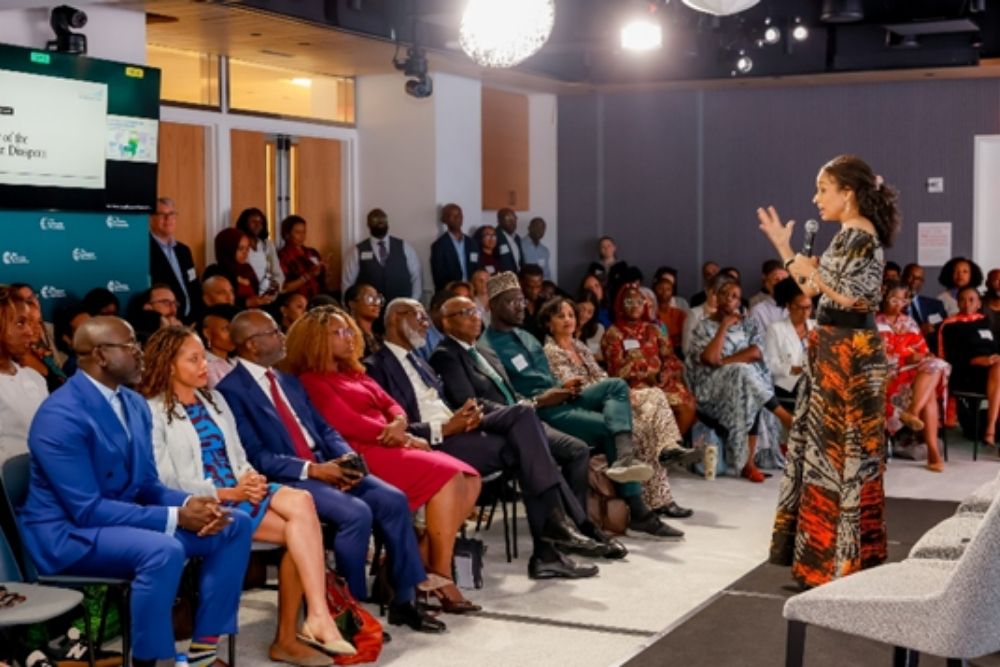
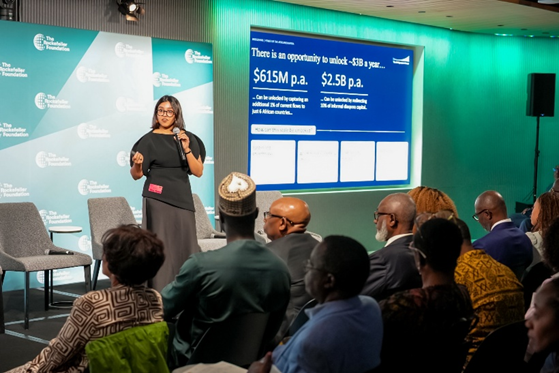
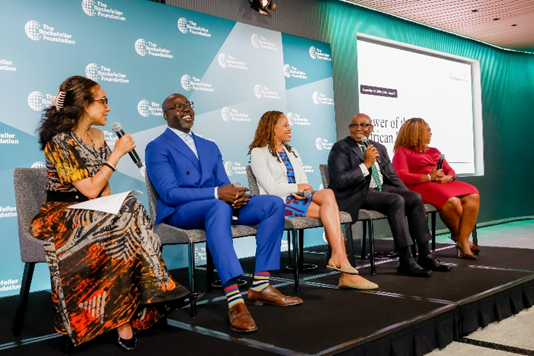
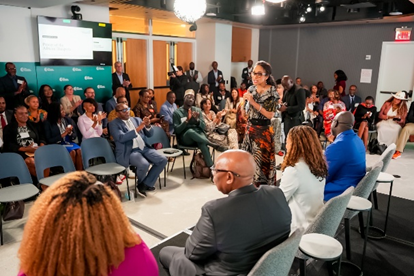
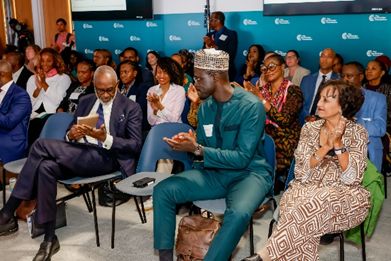
At the recent Unlocking Diaspora Wealth: African Diaspora Leading Innovations in Catalytic Philanthropy convening co-hosted by Wealth4Impact, The Rockefeller Foundation and The Bridgespan Group, Madhuri Mukherjee, Partner of The Bridgespan Group, highlighted an important reality: a large share of diaspora giving is simply not captured by conventional definitions of philanthropy because it happens informally. The result is a paradox: the giving is substantial, but much of the capital remains invisible, unstructured and difficult to aggregate.
The question, then, is not whether Africans abroad are contributing to Africa. They already are. The question is whether we can build the systems that enable that contribution to become more strategic, more coordinated and more transformative. That is where catalytic philanthropy comes in.
From generosity to catalytic capital
Catalytic philanthropy is not simply about writing a larger cheque. It is about using philanthropic capital deliberately to take risks, build institutions, unlock other sources of capital, support innovations that conventional investors may overlook, strengthen local organisations and create conditions for solutions to scale.
It asks a different question from traditional giving. Instead of:
“What problem can my money solve today?” it asks: “What can my capital make possible tomorrow?”
That distinction matters enormously for Africa. A contribution that pays a school fee can change one life. A contribution that helps build a sustainable education institution can change thousands. A donation that supports one entrepreneur is valuable. A philanthropic vehicle that de-risks an emerging fund, strengthens its management systems and attracts commercial investors can potentially unlock capital far beyond the original gift. Catalytic philanthropy is therefore about leverage. And Africa needs more philanthropic capital that is designed to leverage.
The real barrier is not willingness. It is the lack of pathways.
Dr. Ndidi Okonkwo Nwuneli, Co-Founder of Wealth4Impact, described a reality familiar to many Africans in the diaspora. People raise money for funerals, raise money for weddings, support relatives, crowdfund for community needs, contribute to schools and associations, and give because giving is part of who we are.
But much of this giving does not benefit from the structures that could make it more strategic or sustainable. For many diaspora donors, the question is not
“Do I want to give?” It is: “How do I give effectively?”
- Where can I give?
- Who can I trust?
- Can I receive a tax benefit?
- Can my contribution be pooled with others?
- Can I see the impact?
- Can I support an African organisation without creating unnecessary administrative complexity?
- Can I build something that my children and grandchildren can continue?
These are infrastructure questions, and they have consequences.
The Bridgespan research presented at the convening found that diaspora giving faces significant barriers around structure, trust, transparency, regulation, incentives and information. Sending money to Africa can also be expensive; the research highlighted transaction costs of roughly 6–8% in some contexts.
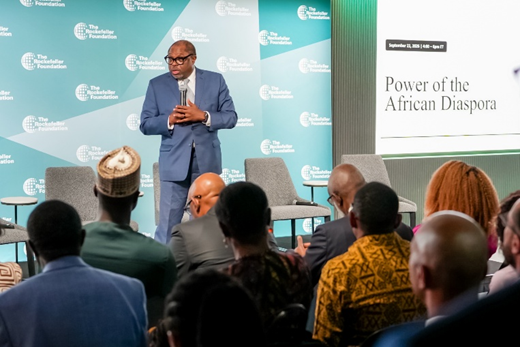
William Asiko, Senior Vice President, The Rockefeller Foundation, drawing on his experience in Kenya’s public sector, highlighted another dimension of the infrastructure challenge: the policy and regulatory environment. He noted that diaspora remittances have historically been viewed largely as household flows rather than as a potential source of development finance. Unlocking that potential requires more than willing donors; it requires policies, regulations and institutional mechanisms that create confidence, ensure accountability and make it easier for diaspora capital to be deployed through trusted channels.
“Diaspora wealth is one of the most under-mobilized sources of capital for Africa’s development. Under the New African Financial Architecture for Development (NAFAD), we are working to build the instruments and institutions that can channel this wealth – alongside domestic savings and pension and insurance assets – into productive, long-term investment on the continent. Strategic philanthropy from the Diaspora is a natural and powerful complement to that effort, and convenings like this one are exactly the kind of partnership NAFAD is designed to build on.”
— Didier Acouetey, Senior Advisor to the President of the African Development Bank on Private Sector Development and the New African Financial Architecture for Development (NAFAD)
When the pathway is difficult, people default to what they know. When the pathway is trusted, simple and credible, participation can grow. We have seen this elsewhere. Nigeria raised US$300 million through an oversubscribed diaspora bond. Kenya has used fintech to lower the barrier to diaspora participation, including enabling contributions as small as US$30. Other countries have deliberately engaged their diaspora in shaping policy and investment opportunities. The lesson is straightforward:
“When the architecture exists, capital can move.”
The diaspora should not only fund Africa. It should help build the vehicles.
This is where the conversation must become more ambitious. African philanthropists should not see themselves merely as donors looking for worthy causes. They should see themselves as builders of the philanthropic infrastructure Africa needs. Consider the Next Narrative Africa Fund.
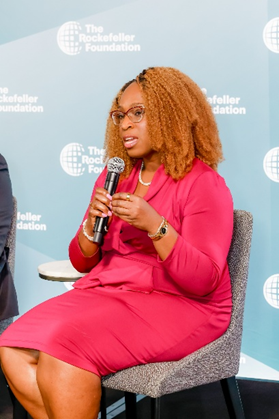
Akunna Cook, CEO of Next Narrative Africa, created the fund to invest in African stories and challenge narratives that continue to define how Africa is perceived globally. The fund began with US$40 million, with the Gates Foundation and Hewlett Foundation among its first investors. The fund itself demonstrates what catalytic philanthropy and investment can look like when an opportunity that once seemed unfamiliar is converted into a structured vehicle.
Investor education was required. A financial model had to be developed, legal structures had to be created, evidence had to be assembled, an unfamiliar asset class had to become understandable to investors, and the demand was there.
The fund received 2,000 applications from 80 countries, with South Africa, Nigeria and the United States among the leading sources. The lesson extends far beyond film.
“African opportunities do not necessarily lack demand. They often lack vehicles through which capital can participate.”
That is an innovation opportunity for the diaspora.
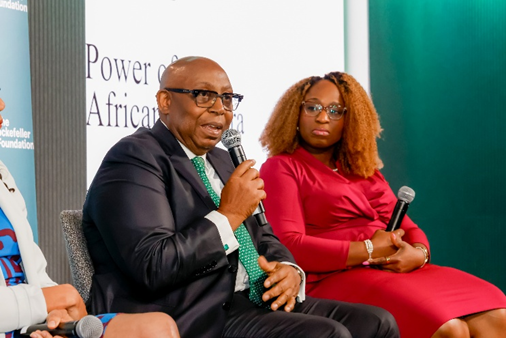
Wale Adeosun of Kuramo Capital Management offered a practical illustration of this challenge from the investment side. As Kuramo evolved toward mobilising African capital, including capital from African pension funds, the African diaspora was not initially treated as a distinct category of African capital, not because the capital was absent, but because the structures for aggregating it, particularly at the retail level, were not yet sufficiently developed.
Kuramo has also used philanthropic vehicles to channel diaspora funding to Nigerian universities and developed a University Advancement Program designed to encourage alumni to give back to their institutions and help make them more sustainable.
And then comes the uncomfortable question: where is African capital?
The fact that international institutions are willing to fund African opportunities is encouraging. But it should also make us uncomfortable. If an Africa-focused fund is raising capital to finance African stories, African businesses or African solutions, where are the African investors?
This was one of the most pointed challenges raised by Dr. Ndidi Okonkwo Nwuneli during the convening. Her concern was not that international funders should stop funding Africa. It was that Africa remains too dependent on a small number of external funders to finance work that Africans should increasingly be capable of financing themselves. This is ultimately a question of agency.
- Who decides what gets funded?
- Who defines the priorities?
- Who determines which risks are worth taking?
- Who decides which ideas deserve to scale?
- Who owns the institutions that will still exist 20 or 50 years from now?
If African capital is absent from those decisions, African agency is inevitably constrained. That is why catalytic philanthropy matters. It can help build the pipeline, absorb early risk, strengthen institutions and crowd in other forms of African capital.
Small capital can become significant capital
The response does not require every member of the diaspora to become a major philanthropist. In fact, one of the most exciting opportunities may be the opposite. Myriad USA’s experience with donor-advised funds and the African Diaspora Innovation Fund demonstrates how structured vehicles can enable people to pool relatively modest contributions around shared priorities. One model discussed at the convening invited individuals to contribute approximately US$500 a year, about US$42 a month, towards a collective fund supporting African innovators.
US$500 may not transform a system, but thousands of people contributing US$500 can create a meaningful pool of capital. Kady Sylla, Director of Myriad USA, pushed this idea further: catalytic philanthropy does not have to begin with large individual fortunes. As she argued, five dollars from one person, one hundred dollars from another and larger contributions from others can become significant when the right infrastructure brings them together. The challenge is therefore to build systems that lower the barrier to participation, allow different segments of the diaspora to participate according to their capacity, and make collective giving easier to organise and sustain.
And once capital is pooled, it can be governed, invested, measured, replenished, and attract other capital. It can become an institution. This is the power of collective philanthropy.
“The future of African philanthropy does not belong only to billionaires, it belongs to communities of people who are willing to organise their resources around a shared vision.”
The diaspora has another form of capital: influence
Money is only one part of the equation. The African diaspora also sits inside some of the world’s most influential financial institutions, corporations, universities, foundations, technology companies and professional networks. That position is itself a form of capital.
Akunna Cook shared that the institutions that initially funded her fund often did so because someone within those institutions, frequently a member of the diaspora, advocated for the opportunity. This is a critical insight.
- You do not have to personally write the cheque to influence where capital goes.
- You can be the person who makes the introduction.
- You can advocate for an African fund within your organisation.
- You can recommend an African partner.
- You can bring an African entrepreneur into a room they would otherwise never enter.
- You can challenge an investment committee to look beyond the usual markets.
- You can use your expertise to strengthen an institution on the continent.
- Your seat at the table is part of your philanthropic capital.
Dr. Ndidi Okonkwo Nwuneli’s challenge to the diaspora was therefore direct: when you have a seat at the table, use it to champion an African idea, an African fund or an African partnership.
But capital will follow trust
None of this works without trust. This is perhaps the hardest part of the equation.
Diaspora donors often trust family members because they know exactly where their money is going. Formal institutions can feel more distant. For diaspora philanthropy to scale, African organisations must therefore demonstrate the characteristics that make capital comfortable: good governance, transparency, accountability, evidence and competent leadership.
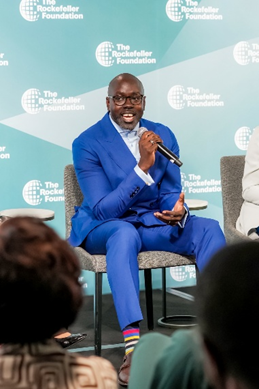
Kwame Owusu-Kesse, CEO of Harlem Children’s Zone, described trust through four elements: sincerity, reliability, competence and care. He then connected institutional trust to governance, evidence, transparency and accountability.
His next point deserves to become a principle for African philanthropy:
“Build institutions, not heroes.”
Philanthropy that depends entirely on the charisma or personal reputation of one individual is difficult to sustain. Institutions need governance, succession, financial stewardship, leadership pipelines, systems that allow the work to continue when the founder is no longer in the room. That is how philanthropy becomes intergenerational.
This is where African families come in
For Wealth4Impact, this conversation is deeply connected to our work with African families.
Our experience through the Supporting the Emergence of Active Philanthropists in Nigeria (SEAPIN) programme has reinforced a simple truth: generational wealth does not automatically become generational impact. It has to be intentionally stewarded.
SEAPIN brought together 25 Nigerian philanthropic families from an initial pool of 57 applicants for a 10-month journey focused on learning, family engagement, strategy and more structured philanthropy. Family members, including siblings, children, nieces and nephews, were encouraged to participate in the process. The objective is not simply to encourage families to give more. It is to help them think differently about what their wealth can accomplish.
A family foundation can become an institution. A donor-advised fund can turn annual fundraising into sustained giving. A family office can integrate philanthropy into wealth stewardship. A philanthropic strategy can align generations around shared values. And a family can begin to see itself not simply as the owner of wealth, but as a steward of capital with the capacity to shape society. That mindset is essential to the next chapter of African philanthropy.
Make money. Do good. Build both.
There is also no reason why African philanthropy should be isolated from African investment. The two serve different purposes, but they can be part of the same ecosystem.
During the convening, Dr. Ndidi Okonkwo Nwuneli pointed to the excitement among diaspora investors around the Dangote IPO. People wanted to participate because they saw the opportunity to make money.
Her challenge was simple: Make money, but also do good and structure both.
This is a powerful reframing. African wealth should not be forced to choose between financial value and social value. Different pools of capital can take different approaches. Some can provide grants, take early-stage risk, invest for market returns, build institutions, finance research, culture or public goods that markets will not fund. The opportunity is to create an ecosystem where these forms of capital reinforce one another. That is what makes philanthropy catalytic.
The question is no longer whether we can
Africa’s diaspora has reached a moment where passive participation is no longer enough. The resources are already moving, talent is already present, networks already exist, wealth is growing, and appetite to contribute is evident.
What is missing is the infrastructure and collective ambition to connect these assets. That means creating better giving vehicles. Building trusted intermediaries, developing African-owned funds, strengthening local institutions, creating incentives for diaspora participation, improving data and transparency, developing cross-border giving mechanisms, supporting African fund
managers, engaging wealth managers and family offices and, perhaps most importantly, creating a culture in which Africans see financing African solutions as part of their responsibility and their opportunity.
The diaspora does not need another appeal to generosity. It needs an invitation to lead. Lead with capital, expertise, networks, influence, imagination; lead by building institutions that can outlast any one donor, founder or generation.
From diaspora wealth to African agency
The most powerful idea to emerge from the conversation was not about remittances. It was about agency. When Africans finance their own ideas, they gain greater influence over what those ideas become. When Africans build their own philanthropic vehicles, they create greater ownership of the development agenda. When African families structure their wealth for long-term impact, they give future generations more than an inheritance. They give them a responsibility, and when the diaspora pools its resources, uses its influence and invests in African institutions, it does more than transfer wealth across borders. It changes the relationship between Africa and its diaspora.
We move from being recipients and donors to being partners and builders. From reactive giving to catalytic philanthropy, isolated generosity to collective action, wealth preservation to wealth stewardship, dependence to agency. The opportunity is enormous. Bridgespan’s research suggests that even formalising or better organising just 1% of diaspora funding could represent more than US$3 billion a year in potential capital for African development.
One percent. That should change the conversation. The question is not whether the African diaspora has enough wealth to make a difference. It is whether we will build the structures, institutions and collective will to make that wealth catalytic.
Africa’s diaspora is already giving. Now it is time to lead, and the future of African philanthropy may depend on it.

