For many African families and business leaders, giving is deeply personal. It is rooted in culture, faith, and a genuine desire to uplift communities. Yet, too often, this noble intention collides with a harsh reality: the giving becomes reactive, exhausting, or even joyless.
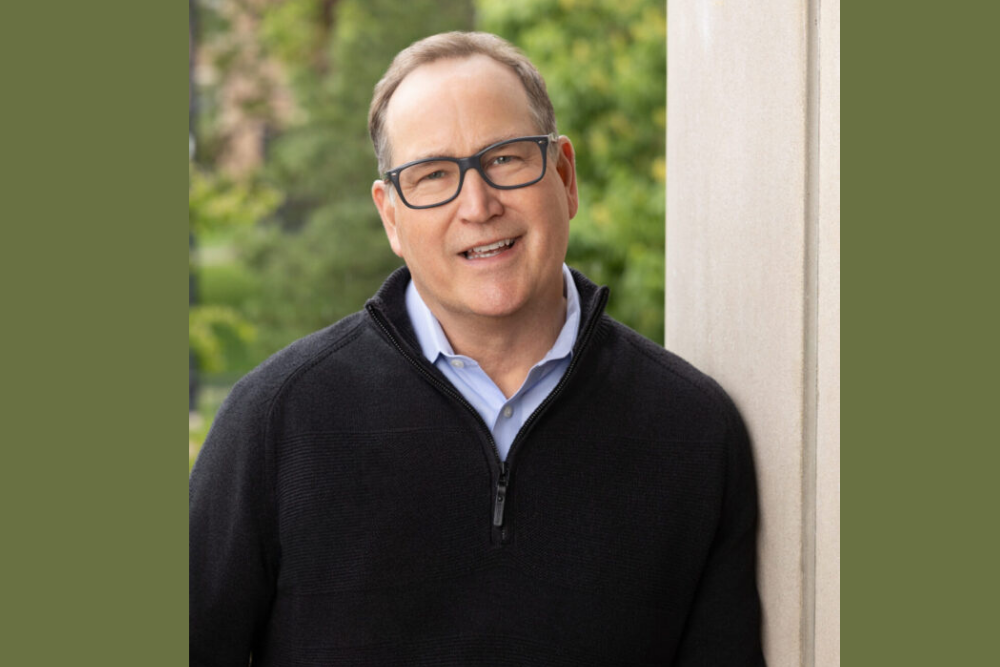
During a virtual SEAPIN session on April 11, 2026, Kyle Peterson, a philanthropist who previously led strategy at the Walton Family Foundation and now serves as a co-founder of Boldly Go Philanthropy, delivered a masterclass on why structure is not the enemy of generosity. Rather, it is the foundation of lasting impact.
This article captures the key insights from that session for African philanthropists, family offices, and foundation leaders who want to move from writing cheques to changing systems.
The Core Problem: Why Giving Often Fails
Kyle Peterson opened by addressing a universal truth: philanthropy is hard. He cited research showing four major barriers that plague givers everywhere, including across Africa:
- Decision overload – faced with millions of nonprofits, where does one even start?
- Stuck in neutral – a feeling that there is no urgency, so giving gets delayed for years.
- Fear of scrutiny – once you start giving, everyone wants something, and your choices are questioned.
- Family dynamics – families are not professional organisations, and decision-making can rupture relationships.
“The net effect is that giving is often delayed, reduced, or becomes joyless. What can actually turn the tide on overcoming these barriers is to have a strategy.”
This was Kyle Peterson’s central message: strategy does not remove joy. It protects it.
The Solution: The Philanthropic Compass
One framework that stood out was the Philanthropic Compass, a simple but powerful tool designed to help families find direction through four interconnected dimensions:
- North – Identity: Your vision, mission, and values.
- East – Impact: What change do you want to see, and for whom?
- West – Approach: How do you give? What tools and philosophies do you use?
- South – Structure: What legal vehicles, governance, and staffing do you need?
Kyle Peterson stressed that while all four matter, Impact and Approach are the most important. They are also the thorniest for families to resolve.
“If you need a direction, start with a compass, not a map. The map is overwhelming. The compass gives you orientation.”
Determining WHAT to Give: The Venn Diagram of Purpose
Another insight challenged conventional thinking: choosing what to fund should not begin with the needs alone, but with the intersection between community needs and a family’s values, expertise, and passions. Kyle Peterson illustrated this through a simple Venn diagram. It answers the question: What should our family actually fund?
- Circle One: The needs and gaps in your community (or country, or continent).
- Circle Two: Your family’s values, interests, expertise, networks, and history.
The magic happens in the intersection of these two circles.
Kyle Peterson warned against two common mistakes. The first is chasing only needs without personal passion. Families who do this lose interest and eventually shut down their giving. The second is funding only what feels comfortable, ignoring real gaps.
“Nothing is worse than disengagement. It is a much greater lost opportunity to pick a poor issue that you’re not interested in than to be fully engaged. Your interests are valid. Honour them.”
For African philanthropists, this means asking: Where does our family’s unique expertise in banking, agriculture, law, or healthcare meet a genuine gap in our own community?
Determining TO WHOM: Depth Over Breadth
A recurring theme throughout the session was that focus matters more than breadth. Many philanthropists want to help everywhere, yet spreading resources too thin often limits impact. To address this, Kyle Peterson introduced a Lead, Support, Respond framework to help families prioritise:
- Lead: You are the champion. You are proactive, you put out requests for proposals, you spend most of your time and money here.
- Support: A secondary area. You fund, but you do not drive the strategy.
- Respond: Opportunistic giving. You take requests, but you do not chase them.
He shared the example of a small foundation that was working on too many issues across an entire state. The board was exhausted. The two-person staff was overwhelmed. By focusing on just two issues within a single metro area, they regained clarity and joy.
“It is problematic when philanthropists consider two or three things to be equal in importance. You have to decide what you lead, what you support, and what you simply respond to.”
Kyle Peterson also addressed the tension between place-based giving and issue-based giving. He has deep respect for place. He cited the Walton family, which focused enormous resources on the small town of Bentonville, Arkansas, moving it from the 15th to the 8th best place to live in the United States.
But he also gave a counter-example: a gentleman who suffers from epilepsy. If he focused only on his local town, he would affect only 5,000 people. Instead, he took a national approach because his passion demanded scale. The lesson? There is no single right answer. The right answer is the one that aligns with your family’s heart and the reality of the problem.
Determining HOW to Give: Three Modes of Philanthropy
Central to the discussion was not simply how much families give, but how they choose to give. Kyle Peterson described this as his favourite quadrant of the compass because it often determines whether philanthropy creates isolated projects or lasting systems change. He outlined three modes:
- Traditional Philanthropy
You give donations to charitable organisations. The organisation is the anchor. Success is measured at the grant level. This is where most people start.
2. Strategic Philanthropy
You focus on a specific problem or opportunity. You look for solutions. You think at the initiative level. You ask: What organisations can help me move the needle on this problem?
3. Catalytic Philanthropy
You realise that even smart grants cannot fix broken systems. So, you use more tools: advocacy, convening, matching funds, and partnerships. You aim to spark change at a systems level.
“After a while, you realize that a lot of things are outside your control. The education system might be broken. There may be bad actors. Catalytic philanthropy is about using every tool you have to spark higher-level change.”
Kyle Peterson revealed a powerful practice from his time at the Walton Family Foundation: every single grant required a match from another funder. Even with billions of dollars, they insisted on bringing others to the table.
“Your ability to create change is not limited to your bank account. Even one of the most well-resourced endowments in the world focuses on bringing other funders to the table. That is a lesson for everybody.”
For African philanthropists, this is transformative. It means hosting a dinner. It means convening other wealthy families. It means turning one unit of giving into two or three units of collective impact.
The Generational Question: How to Keep the Next Generation Engaged
Another recurring theme was sustainability across generations. One of the most urgent questions raised during the session centred on how families can ensure younger generations inherit not only a foundation, but also a sense of purpose.
Kyle Peterson offered three practical strategies:
- Small bites. Give younger family members small, discretionary funds to give to causes they care about, even if those causes fall outside the foundation’s focus.
- Peer-to-peer mentoring. Introduce younger family members to other young philanthropists who have already moved from disinterest to curiosity to passion.
- Touch and feel. Do not keep the next generation in boardrooms. Let them visit the communities, meet the people, and see the problems firsthand.
“Keeping them in boardrooms and offices is not the best thing. Letting them touch and feel and meet the people they have an interest in is huge.”
He also introduced the concept of Opportunity Funds. These are modest, time-limited pools of money that allow younger family members to explore new issues—such as maternal health or technology—without disrespecting the founder’s original focus. If an issue gains traction over several years, it can naturally become a new area of focus for the entire foundation.
“Change must happen naturally, not revolutionarily. Give it time. Respect the legacy, but allow the future to breathe.”
The Matching Principle: Scaling Impact Without Scaling Your Wallet
Another insight that challenged conventional thinking was the principle of matching. Rather than viewing philanthropy as an individual endeavour, Kyle Peterson encouraged families to see collaboration as one of their greatest assets.
He explained that matching can start informally. A dinner. A conversation. A site visit with another family. Over time, as your foundation builds credibility and a track record, other funders will trust your vetting process and join your table.
“It is almost an unseen power that philanthropists have after a while. It is hard to have that power in the beginning. But after a while, you do have the power to convene.”
For African families running hospitals, schools, or agricultural programs, this means shifting from a mindset of “we fund this alone” to “we invite others to fund this with us.”
What This Means for Africa’s Future
The conversation concluded by turning from frameworks to possibility. During the post-presentation discussion, Wealth4Impact co-founder Dr. Ndidi Nwuneli challenged participants to think beyond individual projects and consider what truly transformational philanthropy could look like across Africa.
“Instead of just giving scholarships, should we be changing the educational system? If we are going to do place-based giving, let us be ambitious. Can we make Benue State one of the safest, most productive states in Nigeria?”
This is the difference between traditional giving and catalytic giving. Traditional giving responds to need. Catalytic giving reimagines what is possible.
Kyle Peterson agreed wholeheartedly. He noted that the world needs urgency. Large foundations can take a year to approve a single grant. Smaller, nimbler, leanly staffed philanthropies can move much faster.
Final Reflection: Strategy Is Not the Enemy of Joy
If there is one sentence to take away from Kyle Peterson’s session, it is this:
You cannot give joyfully or effectively without a structure.
The Philanthropic Compass, with its focus on identity, impact, approach, and structure, is not a bureaucratic burden. It is a liberating tool. It frees families from the paralysis of endless choices. It protects them from the exhaustion of trying to be everywhere at once. It gives the next generation a clear entry point.
And most importantly, it transforms giving from a source of anxiety into a source of lasting, meaningful, joyful legacy.
Kyle Peterson put it best in his own words:
“For us, the joy of impactful giving means expressing values across the generations. You want to see progress. You want to leave a lasting and meaningful legacy. That is what impactful giving means to us.”
For African philanthropists standing at the crossroads of immense need and genuine generosity, Kyle Peterson’s message is both a warning and an invitation: stop giving reactively—start giving strategically. Your continent deserves nothing less.
At Wealth4Impact, these conversations reinforce a belief that Africa’s philanthropic future will be shaped not only by generous families, but by families willing to build enduring institutions. Strategic philanthropy requires more than financial commitment; it demands intentional governance, collaboration, and a long-term vision for societal change.
