How funders can turn capital, local knowledge and influence into lasting systems change
The central challenge facing philanthropy worldwide is not simply how much wealth can be mobilised for social good. It is whether that wealth can help change the systems that shape people’s lives from healthcare and education to livelihoods, climate resilience and economic opportunity.
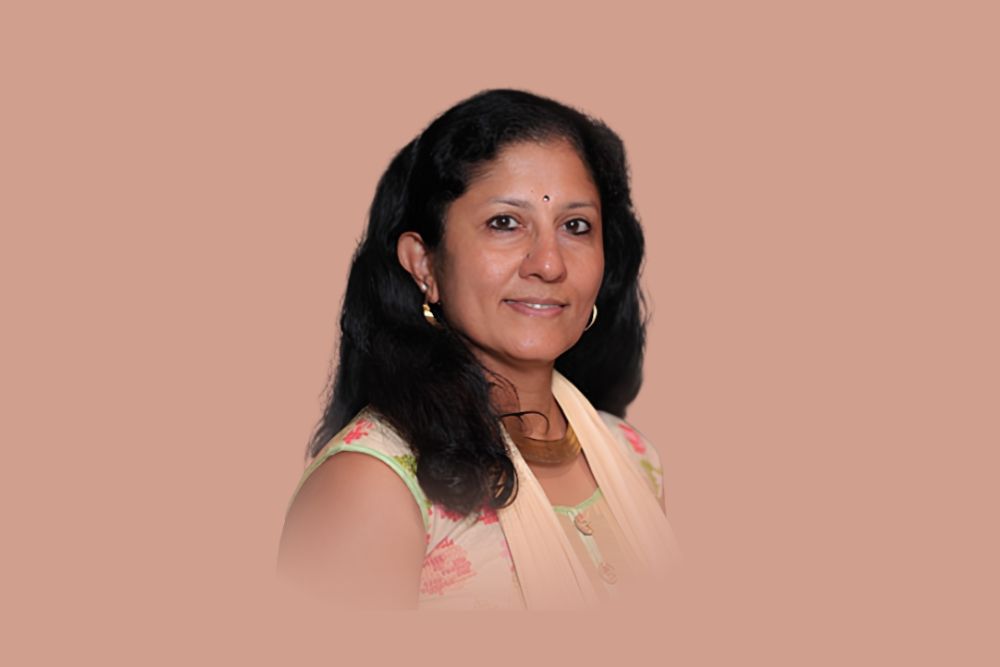
This question framed a 5 September 2026 learning session held through the Supporting the Emergence of Active Philanthropists in Nigeria (SEAPIN) programme. Pritha Venkatachalam, Partner and Co-Head, Asia and Africa, The Bridgespan Group, drew on experience across Africa and Asia to make the case for philanthropy that moves beyond isolated projects and brings funders and institutions together around population-scale outcomes no single actor can achieve alone.
For philanthropists, family foundations, corporate leaders, impact investors and nonprofit executives, the message travels well beyond any one country or region: lasting impact depends not only on the amount of capital deployed, but also how it is used, which institutions it strengthens, and whether the people and organisations closest to a challenge help shape the response.
A changing role for philanthropic capital
Pritha described a funding landscape in flux. Declines in official development assistance and pressure on external philanthropic support make the role of domestic giving, diaspora resources and private wealth increasingly important. At the same time, growing wealth in many regions creates opportunities for locally rooted philanthropy to play a more influential role.
Yet the availability of capital does not guarantee that it reaches the organisations best placed to turn it into progress. Research discussed during the session, drawing on nonprofit organisations in Kenya, Nigeria and South Africa, found that much domestic funding was directed to international nonprofits and public-sector projects, while comparatively little reached African nonprofits directly.
The broader lesson is relevant across contexts: funders should examine not only how much they give, but also resources flow, whose capabilities they build and whether local organisations are equipped to sustain solutions. Philanthropy can be more than a source of grants; it can help shape priorities, strengthen institutions and support long-term change.
From funding projects to changing systems
Direct giving remains essential, but complex challenges such as poor learning outcomes, malnutrition, weak primary healthcare and limited economic opportunity are shaped by interconnected systems. A successful project may demonstrate what works without changing the wider conditions needed for that solution to endure or reach more people.
A systems-oriented approach combines a clear agenda for an issue with evidence, capable organisations, stronger public systems, collaboration and adequate resources. It asks not only how many people a programme reached, but whether outcomes improved, institutions became stronger, public investment was influenced, and effective approaches can be sustained or adapted elsewhere.
This requires investment beyond visible programme activities. Organisational capacity, community ownership and monitoring, evaluation and learning are part of the infrastructure of impact, not optional overheads. For funders everywhere, the distinction between activity and outcomes is fundamental to making sound decisions about what to continue, change or scale.
Collaboration can make greater ambition possible
No single foundation can solve a population-level challenge alone. Collaboration allows philanthropists, nonprofits, government, businesses and technical partners to combine capital, expertise, networks and influence. It can also help partners share risk and pursue changes that would be difficult for one organisation to finance or deliver independently.
Pritha illustrated this with an Indonesian collaborative initiative to address childhood stunting, as an example. A family foundation’s initial financial commitment helped attract a global health funder and the World Bank, while the work informed government nutrition spending at a much larger scale. Over five years, stunting in the areas covered fell from 28 per cent to 20 per cent, according to the example shared in the session.
In India, a foundation-led education coalition worked with co-funders, implementation organisations and government across four states. Over eight to ten years, it supported more than 20 million students and improved learning outcomes, not simply attendance or access. These examples show how a foundation’s contribution can become more consequential when connected to partners and public systems.
The test for any collaboration is straightforward: what can the group achieve together that its members could not achieve separately? Each partner should understand the shared outcome, the value it brings and the additional value the collaboration is expected to create.
Every partner needs a clear value proposition
Effective partnerships recognise that different actors bring different strengths. International funders may contribute capital, technical expertise or global networks. Locally rooted foundations and organisations can offer contextual knowledge, trusted community relationships, credibility with stakeholders and an understanding of how to navigate local institutions.
Business-linked philanthropies may also contribute relevant assets such as logistics networks, distribution channels, financial services expertise or professional capabilities. In the session, Pritha described a family with shipping and logistics businesses exploring how its infrastructure could support the delivery of medical products, diagnostics and vaccines.
The principle applies globally: partnerships are stronger when they mobilise more than money. Capital matters, but so do legitimacy, reach, influence, technical knowledge and implementation capacity. Recognising these complementary assets can help partners shape a more effective strategy from the outset.
Design collaboration to last
Pritha’s advice points to several practical disciplines. First, develop an honest account of impact: what has been achieved, what has proved difficult and what has been learned. A costly evaluation is not always the starting point, but a credible narrative helps potential partners understand both the opportunity and the challenges.
Second, establish a shared goal and a clear reason to work together. Partners need alignment on mission and values, mutual trust and agreement on what each will contribute. Third, define governance early: which decisions require collective approval, what can be delegated and whether a trusted coordinating or ‘backbone’ organisation is needed.
Regular communication is essential, including transparent discussion of setbacks. Partners should also design with the long term in mind, so early pilots connect to a credible path towards broader impact. Without clear decision rights, capable teams and sustained communication, collaboration can become slow, costly or fragile.
Funders must also resource monitoring, evaluation and learning. During the session, Pritha suggested considering around 3–5 per cent of programme budgets for this work, depending on context, and highlighted the value of independent evaluation. Evidence helps funders adapt their approach, distinguish activity from outcomes and make a stronger case for further investment.
The risks of collective action
Collaboration is not automatically efficient. It requires time, capable people and a willingness to share decisions and credit. Competing priorities, weak communication, unclear governance and impatience can undermine even well-intentioned efforts. When partners focus on recognition and attributionto their work, rather than shared results, an ecosystem can degenerate into an ‘ego system’.
The examples discussed in the session also underline the importance of time. Meaningful systems change often takes years, not months. Patient capital is not passive capital: it requires clear milestones, active stewardship, honest learning and a willingness to change course when the evidence demands it.
Questions for philanthropic leaders
For philanthropists, family offices, foundations, corporate leaders and nonprofit executives, the practical questions are:
- What measurable change are we seeking, and what evidence supports our approach?
- Which partners are essential, and what can each contribute beyond money?
- What organisational capabilities and governance must be funded for the work to endure?
- How will the people and communities affected shape the work, and how will we know whether outcomes are improving?
These questions are useful whether a funder works locally, nationally or across borders. They encourage a shift from fragmented activity to a more deliberate practice that connects capital with capable institutions, local leadership and shared accountability.
From generosity to collective power
Pritha’s message was ultimately about the “greater power of many to achieve bold social change”. Philanthropists and foundations can set their north star and ambitious goals, invest in the institutions and evidence needed to pursue them, and invite other values and mission aligned partners into a shared effort.
The next leap for philanthropy will not be measured only by the volume of giving or the number of programmes delivered. It will be measured by whether philanthropic capital and leadership help strengthen institutions and community ownership, improve outcomes, and build the collective power required for lasting systems change.
The opportunity is global: move beyond asking what one donor can fund and ask what a well-aligned group of partners can make possible for the communities they serve.
